
Unilever Divests Food Business to McCormick, Creating a Global Flavor Powerhouse
Iconic Brands Aligned Under a Single Strategy
A Landmark Move in Global Food Restructuring
Unilever’s divestment of its food division to McCormick accelerates consolidation within the global flavor industry, confirming a strategic shift toward specialized business models. This $15.7 billion deal creates a giant with $20 billion in combined revenue, fundamentally redefining the competitive landscape across the agrifood and retail sectors.
A Move Redefining the Global Food Map
Barcelona, 31/03/26
Unilever’s decision to exit its food business aligns with a clear trend of strategic focus within the FMCG sector: reducing diversification in favor of high-margin, high-growth categories.
Valued at $15.7 billion, this transaction allows Unilever to double down on personal care, wellness, and home care, moving away from mature segments with lower differentiation. For McCormick, the acquisition represents a massive scale-up, consolidating its mission to lead the global flavor business. The resulting entity, boasting $20 billion in revenue, is positioned to dominate an environment where premiumization, convenience, and organoleptic excellence are the primary drivers of value.
A Brand Portfolio of High Strategic Value
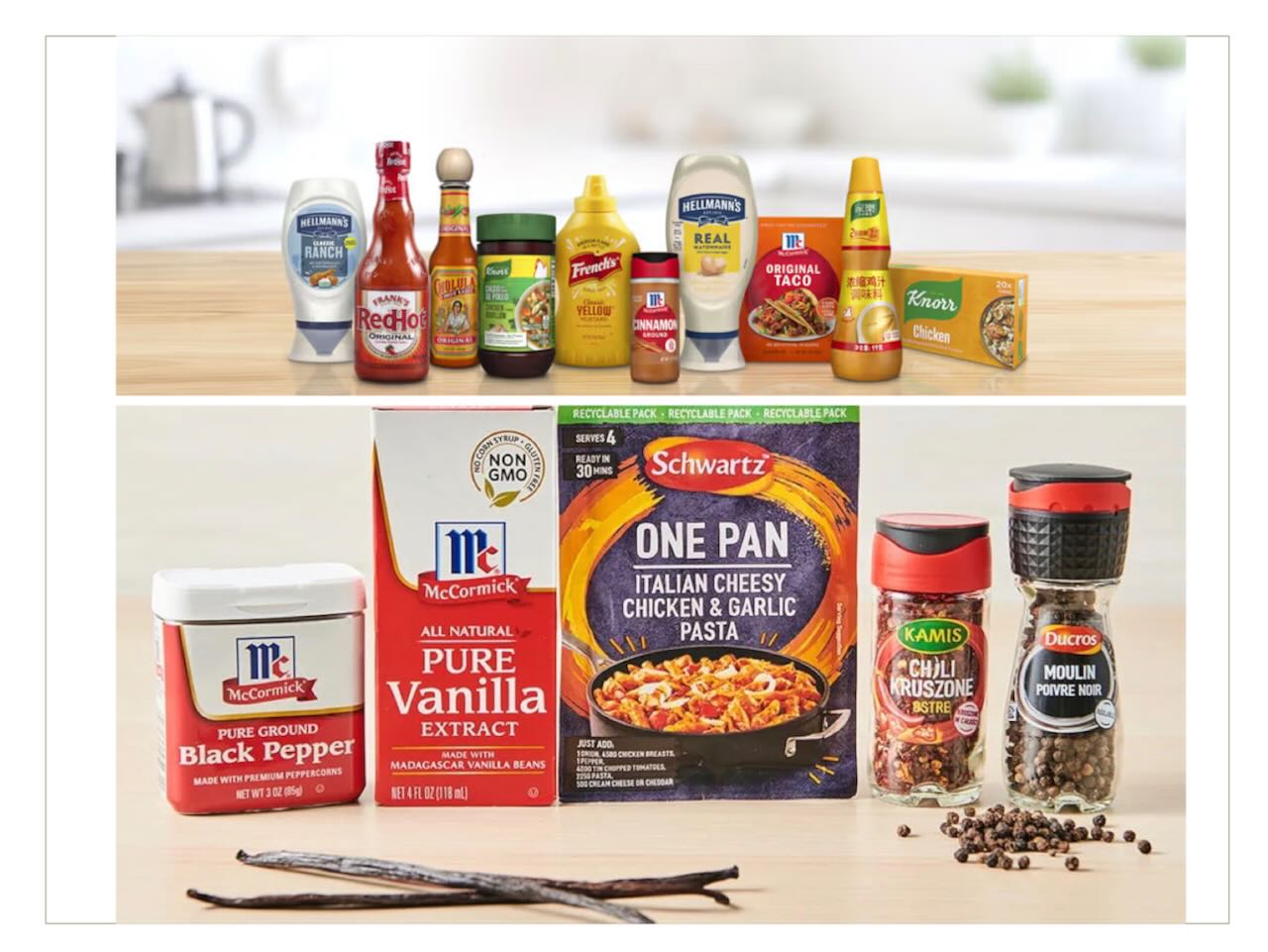
Integrating iconic brands such as Knorr, Hellmann’s, Maille, and Cholula with McCormick’s existing portfolio creates a peerless platform in condiments, sauces, and culinary solutions.
This operation is more than a mere volume play; it is a calculated bet on high-value-added offerings backed by strong brand equity and innovation capacity. As consumers increasingly seek sophisticated gastronomic experiences at home, the new group is ideally positioned to leverage shelf-space premiumization, new format development, and the internationalization of regional flavors. Furthermore, the synergy between geographical footprints and distribution channels will accelerate growth in key global markets.
Unilever Accelerates its Pivot Toward High-Growth
For Unilever, the sale reflects a commitment to simplification and a focus on businesses with superior profitability and growth potential.
Retaining a core business volume of €39 billion post-divestment, the company strengthens its foothold in personal care and health—categories characterized by robust demand dynamics and higher margins. Notably, Unilever’s 9.9% residual stake in the new venture suggests continued confidence in the flavor sector’s potential, even as it steps back from active management. Expected to close in 2027, this deal highlights a broader industry shift: major groups reshaping portfolios to navigate margin pressure, rapid innovation, and the urgent need for clear market differentiation.
infoodspro+